
Getting a Savannah-Area Rental Ready From Ulsan: A Korean Engineer Calls the HVAC Crew
By Sagar Shankaran, Founder of CallSphere
An engineer in Ulsan speaks Korean, the Pooler HVAC dispatcher hears English, and the rental's AC, water heater and lockbox get sorted before his family lands.
Key takeaways
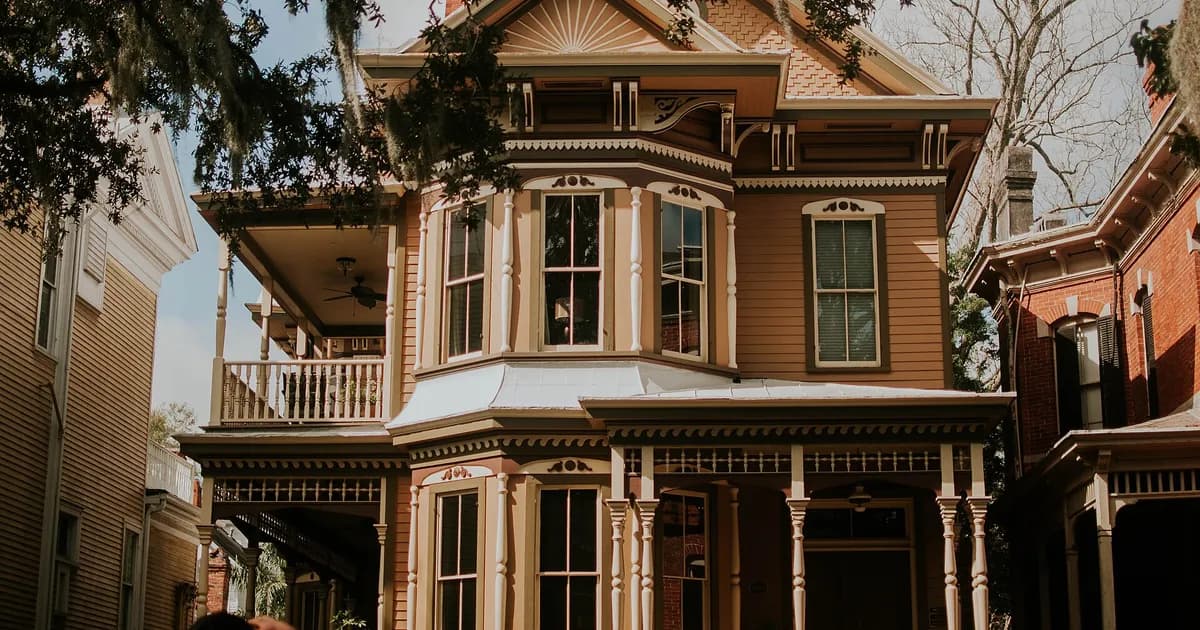
The house is a three-bedroom rental off a quiet cul-de-sac in Richmond Hill, Georgia. The man responsible for making it livable is about 7,000 miles away, in Ulsan, South Korea, where it is already tomorrow. Park Jun-ho (a composite, not a real customer) is an engineer transferring to the Savannah area, where the Hyundai Motor Group EV plant in Bryan County has drawn engineers and suppliers. He signed the lease from Korea. His wife and two kids land at Savannah/Hilton Head International in eleven days.
The property manager's move-in report has three lines on it that worry him: "AC blowing warm upstairs", "water heater pilot keeps going out" and "garage door opener missing remote". The landlord has said, reasonably, that small repairs are on the tenant until the first walkthrough, and that he can use any licensed company he likes. So on a Tuesday night in Ulsan, Mr. Park looks up an HVAC and home-repair company in Pooler and dials the number on its website. It is 8:10 a.m. in Georgia.
The dispatcher, Tammy, answers in English. Mr. Park reads English contracts well. Talking about refrigerant and pilot lights on a crackly international line, with a Georgia accent coming back at him, is another thing.
What breaks on this call when nobody speaks Korean
Without an interpreter, the call ends with a polite "I'll email you", the email sits in a queue, and the family lands to a hot house in a Georgia summer.
Small companies feel this in three specific ways:
- The job never gets scoped. Tammy needs to know whether the upstairs unit is a separate system, whether the thermostat shows a temperature at all, and whether the outdoor unit is running. Those are yes-or-no questions in English. Across a language gap they become a five-minute muddle that ends with "we'll send someone to look", which means a diagnostic visit nobody can let the technician in for.
- Access gets garbled. Lockbox codes, gate codes and "the key is under the second planter" are exactly the details that are dangerous to get half right. One transposed digit, and the technician drives forty minutes to a locked door.
- Payment stalls. The company wants a card on file before dispatching to an empty house. Mr. Park wants to know what he is agreeing to. Neither side wants to read a card number back and forth three times.
Pooler has grown fast, and many newcomers think and negotiate in Korean first. A company that takes that call cleanly gets the job, and often the next few from the same circle of families.
Hear it before you finish reading
Talk to a live CallSphere AI voice agent for home services in your browser — 60 seconds, no signup.
Tammy's side and Mr. Park's side, a few seconds apart
With a live interpreter on the company's main number, the same call is just a service call. Tammy speaks English and Mr. Park hears Korean; he answers in Korean and Tammy hears English, a few seconds behind him. Here is roughly how it goes:
- The line answers and asks which language the caller would like. He says Korean. The interpreter voice greets him with "안녕하세요" and tells him, in Korean, that the dispatcher will speak in English and everything will be interpreted both ways.
- Tammy asks for the property address and whether anyone is living there now. He says, in Korean, that the house is empty and his family arrives on the 14th. She hears that in English.
- She works through the AC: one thermostat or two? He explains in Korean that there are two, the downstairs one works, and the upstairs one shows 84 degrees with the fan running. Tammy notes "second-floor system, likely low charge or a failed capacitor, tech to diagnose".
- He asks, in Korean, whether the water heater problem could be dangerous. Tammy answers plainly: if anyone smells gas, leave the house and call the gas company's emergency line; otherwise the technician will check the thermocouple and the venting. He hears that in Korean and asks her to repeat the gas part, which she does.
- She gives the diagnostic fee and the arrival window, and asks how the tech will get in. He reads the lockbox code digit by digit in Korean, and Tammy reads it back in English. He hears her readback in Korean and confirms.
If you run a home-services company and want to know what it actually sounds like, open the live interpreter demo in your browser, choose Korean, and have a Korean-speaking friend play Mr. Park while you play dispatch.
The Ulsan-to-Pooler repair call, mapped
This is what a two-truck HVAC and handyman shop near Savannah could put on its main line. The interpreter handles language; your dispatcher and your rules handle the rest.
flowchart TD
  A[Caller in Ulsan dials the Pooler shop] --> B{Inside office hours in Georgia?}
  B -->|No| C[AI receptionist answers and asks for a language]
  C --> D[Caller picks Korean and leaves address, problem and best callback time]
  D --> E[Dispatcher calls back at the agreed Korea evening hour]
  B -->|Yes| F[Dispatcher answers in English, caller hears Korean]
  E --> G[Scope the job: AC upstairs, water heater pilot, garage remote]
  F --> G
  G --> H{Anyone home to let the tech in?}
  H -->|No| I[Lockbox code read in Korean, read back in English, confirmed]
  H -->|Yes| J[Property manager meets the tech]
  I --> K[Card taken on the call, fee and arrival window confirmed in both languages]
  J --> K
  K --> L[Tech finishes, office calls Ulsan with results interpreted into Korean]
The branch worth copying is the first one. Ulsan is thirteen hours ahead of Georgia in summer and fourteen in winter, so a lot of these calls arrive at 2 a.m. Pooler time. If nobody is in the office, the call should not end in a voicemail greeting in English that the caller cannot answer.
Calls at Korean dinnertime: setting up the callback
The best callback window for a caller in Korea is your early morning, roughly 6 to 9 a.m. Eastern, which lands in their evening. Call back at noon and the caller is asleep.
CallSphere's AI receptionist can answer the after-hours call, ask the caller to pick a language, take the address and the problem description in Korean, and note the callback time. Your dispatcher arrives at 7 a.m. to a written job request in English and a caller expecting to hear from them. When the dispatcher makes that call, the interpreter carries it in both directions again, so the caller gets the same experience going out as coming in.
A few habits help:
Still reading? Stop comparing — try CallSphere live.
See the home services AI agent handle a real call — complete, industry-specific, and live in your browser. No signup.
- Say numbers slowly and in groups. "Four-seven, two-nine" interprets more cleanly than a fast run of digits. Have the caller read codes back.
- Keep the dispatch note in English. The job ticket looks like every other job ticket.
- Close the loop with a results call. When the tech finishes, call the overseas customer with what was found and fixed. That call is what earns the referral.
What still belongs to your dispatcher, the landlord and the lease
The interpreter carries words. It does not quote prices, approve work, or decide who pays for what between a tenant and a landlord. That stays with your team and with the people on the lease.
- Who authorizes the work. If the repair is the landlord's responsibility, get the landlord or the property manager to approve it in writing. The interpreter can help Mr. Park understand what you are asking, but the lease decides who signs.
- Pricing comes from you. Your dispatcher states the fee; the interpreter repeats it in Korean and never estimates or discounts.
- Card data is handled your usual way. Take phone payments through the process you already trust.
For how shops like yours use the receptionist for booking and dispatch, see the home services page. Plan costs for your call volume are on the pricing page.
Frequently asked questions
Do we need a new phone number for Korean-speaking customers?
No. The interpreter works on the number you already publish on your trucks, your website and your Google listing. The first thing a caller hears can be a language choice, and once they pick Korean, the rest of the call is interpreted in both directions until someone hangs up.
What if the caller switches between Korean and English mid-call?
That is common with engineers who use English at work: model numbers and addresses in English, everything else in Korean. Your dispatcher hears English either way. If something sounds unclear, ask the caller to repeat it, as on any noisy call.
Can the interpreter handle the outbound callback to Korea?
Yes. The interpreter works on calls your team places as well as calls it receives, so your dispatcher can phone the customer back in Korea and the conversation is interpreted in both directions. International calling rates from your phone carrier still apply as usual.
Our area also gets Spanish and Hindi callers. Is it only Korean?
No. The in-call menu lists Korean, Spanish, Hindi, Chinese, Japanese, Arabic, Portuguese, Russian, French, German and Italian, and the interpreter covers 57+ languages in all.
Does it replace our dispatcher?
No. On staffed calls it sits between your dispatcher and the caller. When nobody can pick up, CallSphere's AI receptionist can answer, take the job in the caller's language and book a callback.
Before the next relocation season, spend five minutes with the live interpreter demo. Pick Korean, read a lockbox code out loud, and listen to it come back.

Written by
Sagar Shankaran· Founder, CallSphere
LinkedInSagar Shankaran is the founder of CallSphere, where he builds production AI voice and chat agents deployed across healthcare, hospitality, real estate, and home services. He writes about agentic AI, LLM engineering, and shipping voice agents that handle real calls in production.
Try CallSphere AI Voice Agents
See how AI voice agents work for your industry. Live demo available -- no signup required.


