
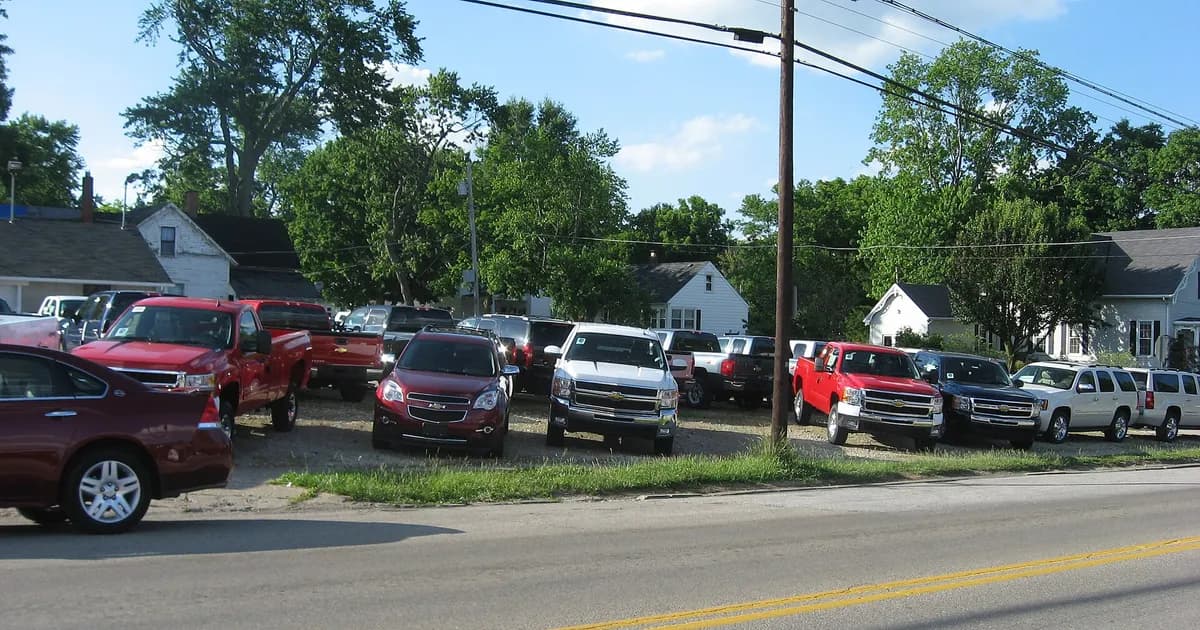
A Guatemala City Buyer Calls a Houston Used-Truck Lot in Spanish to Buy and Export a Pickup
By Sagar Shankaran, Founder of CallSphere
A hauler in Guatemala City wants a diesel pickup from a Houston lot. In Spanish on his side and English on yours, the call covers VIN, title and the trip to port.
Key takeaways
Two people want the same deal and cannot quite say so to each other. On one end is a used-truck lot off the North Freeway in Houston, with a row of three-quarter-ton diesel pickups and a sales manager who speaks lot Spanish: enough for "sí, está disponible" and a test drive, not enough to explain a branded title over a crackling line. On the other end is Rigoberto, who runs a small hauling business out of Mixco, on the western edge of Guatemala City, and has been watching that lot's listings for a month. (Rigoberto is a composite. Houston dealers who sell to Central American buyers will know him.)
He wants one specific truck. He has the photos, the mileage and the asking price. What he does not have is a way to ask the twelve questions that stand between a listing and a wire transfer, in Spanish, to someone who can actually answer them. So most calls like his end the same way: a polite "le mando un WhatsApp" and a buyer who quietly takes his money to a cousin's contact in Miami.
What a buyer in Mixco has to hear before he wires a deposit
He needs four answers from the dealer himself: the truck exists and matches the photos, the VIN he was sent is the VIN on the truck, the title is clean and physically in the dealer's hands, and there is a clear path from the lot to a ship. Until he hears all four, no deposit moves.
None of these are hard questions for a Houston dealer. They are hard questions to ask and answer across a language gap, because each one has a follow-up that matters. "Is the title clean?" becomes "has it ever been a salvage or flood title?", which becomes "was it in Houston during the last big storm?", which is exactly the conversation a careful buyer wants and a careful dealer is happy to have. With a live interpreter on the dealer's line, Rigoberto speaks Spanish, the sales manager hears English a few seconds later, and the answer comes back to Rigoberto in Spanish.
The export call, mapped from listing to car carrier
Here is how a Spanish-speaking export buyer's call can run on a dealer's existing number. The interpreter carries the language at every step; the dealer's people and process do the rest.
Hear it before you finish reading
Talk to a live CallSphere AI voice agent for auto shop in your browser — 60 seconds, no signup.
flowchart TD
  A[Buyer in Guatemala City calls the Houston lot] --> B[Line offers a language choice and he picks Spanish]
  B --> C{Sales manager free right now?}
  C -->|No| D[AI receptionist takes the stock number and his WhatsApp in Spanish]
  D --> E[Callback booked for his evening, after his last delivery]
  C -->|Yes| F[Manager confirms the truck in English, buyer hears Spanish]
  E --> F
  F --> G[VIN read aloud and texted, buyer reads it back in Spanish]
  G --> H{Title clean and in hand?}
  H -->|No| I[Dealer says so plainly and offers another truck]
  H -->|Yes| J[Deposit terms and wire details explained in Spanish]
  J --> K[Dealer connects buyer with the shipper for the port leg]
The branch that matters most is the first one. Export buyers usually call in their own lunch hour or after work, which is when a lot is busiest. If nobody can pick up, CallSphere's AI receptionist answers in Spanish, takes the stock number and the buyer's number, and books a callback, so the lead does not end in an English voicemail he will never return.
Reading a seventeen-character VIN across two languages
The VIN is where a bilingual call proves itself, and the safest way to handle it is to say it and send it. Letters and numbers sound different in Spanish, so the dealer reads the VIN aloud, texts it at the same time, and asks the buyer to read it back.
A version of the exchange might go like this:
- The sales manager: "I'm reading the VIN off the driver's door now, and I'm texting you the photo while I read."
- Rigoberto hears that in Spanish, opens the photo, and reads the characters back in Spanish. The manager hears each one in English and confirms they match the sticker.
- Rigoberto asks, in Spanish, whether the odometer reading in the listing is the one on the dash today. The manager walks to the cab and reads it off.
- Then the question every export buyer eventually asks: was this truck ever in a flood? The manager answers in English, plainly, including the part about the vehicle history report he is about to email.
VINs never use the letters I, O or Q, which helps, but the readback is the step that catches the mistakes. A dealer who wants to hear how it sounds can try the live interpreter in a browser right now: pick Spanish, have a Spanish-speaking colleague play the buyer, and read a VIN off any truck on the lot.
Where the dealer's job ends and the shipper's begins
The interpreter makes the conversation possible; it does not handle export paperwork, customs filings or Guatemalan import rules. Dealers who say that out loud on the call earn more trust than dealers who promise a door-to-door price they do not control.
- The title and export filings are real work. US Customs and Border Protection reviews a used vehicle's title and documents before it leaves the country, and freight forwarders handle that timing every week. The dealer's part is a clean title in hand and a bill of sale that matches it.
- The port leg belongs to the shipper. Most Houston-to-Guatemala trucks go by roll-on roll-off ship or in a container toward the Caribbean or Pacific side. The dealer can introduce a forwarder; the forwarder quotes the sea freight.
- Duties and registration happen in Guatemala. Taxes, import rules and plates are set by Guatemalan authorities and handled by the buyer's customs broker there. The dealer should not guess at those numbers, in any language.
- Money moves the way the dealer already requires. Wire instructions, deposits and release of the title follow the dealer's normal policy. Read the wire details slowly and confirm them by email, since a misheard account number is expensive in either language.
The automotive overview shows how dealers use the rest of CallSphere on the sales and service side, and the logistics page covers how forwarders and drayage firms use the same tools on their end of the trip.

Setting up a Houston lot for Spanish-speaking export buyers
The interpreter works on the number already printed on your listings.
Still reading? Stop comparing — try CallSphere live.
See the auto shop AI agent handle a real call — complete, industry-specific, and live in your browser. No signup.
- Offer the language choice in the first seconds. A buyer calling from Guatemala City is paying for the call and will hang up on an English phone tree.
- Write your export checklist in English once. Truck confirmed, VIN readback, title status, history report, deposit terms, shipper introduction. The interpreter carries every item into Spanish, so you never maintain a second script.
- Cover lunch and evenings. Let the AI receptionist take the stock number and book a callback when your manager is on the lot with a walk-in customer.
- Send what you say. VIN, odometer photo, wire details and the bill of sale all go by text or email as well as by voice.
- Keep a short list of forwarders you trust. The buyer's next question after "is it clean?" is always "how does it get to me?"
Plan terms for the interpreter and the receptionist are on the pricing page, so you can match them to how many export calls your lot actually gets.
Frequently asked questions
Do I need a separate phone number for Spanish-speaking buyers?
No. The interpreter joins calls on the number you already publish on your listings and your website. The caller picks Spanish at the start, and from then on the call is interpreted in both directions until it ends. Your sales manager speaks English the whole time and never switches lines or dials a third party.
Can the interpreter tell my buyer what Guatemalan customs will charge?
No, and neither should your salesperson. The interpreter carries what each person says; it does not know duty rates or import rules. Those come from the buyer's customs broker in Guatemala. What it does well is let you say clearly, in Spanish, what you are responsible for and what you are not, which buyers appreciate.
What if the buyer speaks Guatemalan Spanish with local slang?
Everyday Central American Spanish is ordinary Spanish to the interpreter, including the way buyers talk about trucks, loads and roads. For anything that has to be exact, such as a VIN, a price or a wire reference, use the readback and send it in writing as well. That habit catches mistakes in any language, on any call.
Does it work when my manager calls the buyer back?
Yes. A callback placed through the same line can carry the interpreter, so the buyer hears Spanish on your return call too. Many dealers book those callbacks for the buyer's evening, after his own workday, which is when he can actually talk.
What other languages do export buyers use?
Houston lots also hear from buyers who speak Portuguese, Arabic, Russian and French, among others. The interpreter's call menu lists Spanish, Portuguese, Arabic, Russian, French, Chinese, Hindi, Japanese, Korean, German and Italian, and it covers 57+ languages in all.
The quickest test is the honest one. Open the live interpreter demo, choose Spanish, and have someone on your team call you as the buyer from Mixco. If you can sell him the truck on that call, you can sell it to the real one.

Written by
Sagar Shankaran· Founder, CallSphere
LinkedInSagar Shankaran is the founder of CallSphere, where he builds production AI voice and chat agents deployed across healthcare, hospitality, real estate, and home services. He writes about agentic AI, LLM engineering, and shipping voice agents that handle real calls in production.
Try CallSphere AI Voice Agents
See how AI voice agents work for your industry. Live demo available -- no signup required.



