OpenAI B2B Signals: Frontier Companies Use 3.5x More AI Per Employee
By Sagar Shankaran, Founder of CallSphere
OpenAI's new B2B Signals research finds frontier companies use 3.5x more AI intelligence per employee — what it means and how to close the gap.
Key takeaways
A Real Number, Finally
OpenAI launched its B2B Signals quarterly research initiative this week. The headline finding: frontier companies use 3.5x more AI intelligence per employee than typical firms.
"AI intelligence per employee" is OpenAI's composite metric — tokens consumed, agent runs, tool invocations, and similar usage signals normalized per headcount. It is not a perfect measure, but it is the cleanest public signal yet of the gap between leaders and laggards.
What "Frontier" Means in This Context
B2B Signals defines frontier companies as the top quartile by AI adoption depth — companies that:
- Have AI in production across multiple business functions
- Use agentic workflows, not just chat
- Have AI-native processes, not retrofits
- Measure AI ROI as a standard line item
The gap is not "they use ChatGPT and we don't." It is "they have rebuilt workflows with AI in the loop, and we haven't."
Where the 3.5x Comes From
flowchart TB
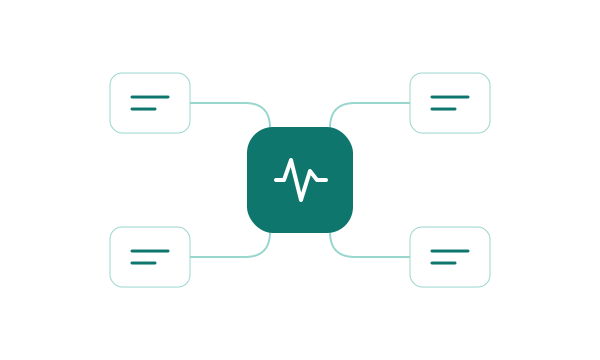
    AIperEmp[3.5x AI per employee] --> A1[More tools<br/>chat, agents, code, voice]
    AIperEmp --> A2[More channels<br/>internal + customer-facing]
    AIperEmp --> A3[Higher per-tool depth<br/>real workflows, not novelty]
    AIperEmp --> A4[Better infrastructure<br/>SSO, governance, evals]
Each axis compounds. A frontier company is not 3.5x deeper on one axis; it is 1.3-1.5x deeper on several axes that multiply.
Hear it before you finish reading
Talk to a live CallSphere AI voice agent in your browser — 60 seconds, no signup.
What the Laggards Look Like
The bottom-quartile companies in B2B Signals share patterns:
- Single point-of-use (one team uses ChatGPT, nobody else does)
- No agent deployments — only chat
- No AI line item in any P&L
- AI lives in shadow IT, not in IT
- No vendor governance or eval framework
The fix is not technical. It is a leadership decision to treat AI as a category of operating spend with the same governance attention as cloud or telephony.
Closing the Gap
Three moves that consistently move companies up the curve:
- Pick a customer-facing workload — voice/chat reception, sales follow-up, after-hours coverage — and deploy a vertical AI agent in weeks, not quarters
- Pick an internal workload — IT helpdesk, HR FAQ, sales enablement — and deploy an agent there
- Build a measurement story — set up AI KPIs alongside revenue, cost, and quality
The first two get visible wins; the third sustains the program.
CallSphere as the Customer-Facing Step
CallSphere is engineered for move #1. The platform:
- Ships finished, vertical voice/chat agents for 6 verticals
- Covers Voice / Chat / SMS / WhatsApp
- Speaks 57+ languages
- Launches in 3–5 days
- Has 14 function tools and 20+ DB tables backing the agent
- Prices at $49 / $99 / $149 monthly with a free trial
The integration is short. The compounding is immediate. Every call/chat the agent handles is intelligence-per-employee you did not have last quarter.
The IT Helpdesk Path
For move #2 inside an enterprise, CallSphere's IT helpdesk vertical handles password resets, ticket triage, status updates, and L1 support over voice or chat. The same agent works for after-hours coverage.
Still reading? Stop comparing — try CallSphere live.
CallSphere ships complete AI voice agents per industry — 14 tools for healthcare, 10 agents for real estate, 4 specialists for salons. See how it actually handles a call before you book a demo.
Why "AI Per Employee" Will Become a Standard KPI
By the end of 2026, expect AI-per-employee to show up in:
- Annual reports of public companies
- Board decks
- McKinsey / Gartner benchmark reports
- M&A diligence checklists
The companies that establish the metric internally now will be ahead of the audit cycle when it becomes industry standard.
A Word on the Methodology
B2B Signals draws on OpenAI's own platform telemetry. It is biased toward OpenAI-using enterprises and toward measurable usage rather than business outcome. Treat the 3.5x as directional, not absolute. The shape of the gap is real even if the exact multiple shifts.
CTA
Want to be on the frontier-company side of the 3.5x gap? Start with one customer-facing voice or chat workload — book a CallSphere demo at https://callsphere.ai/demo.
FAQ
Q: Is 3.5x the right benchmark for my industry? A: It is a cross-industry average. Capital-intensive industries (banking, healthcare, telecom) typically show wider gaps; service industries show narrower gaps.
Q: How fast can a typical company close the gap? A: 12–18 months to move one quartile is realistic. Two quartiles in the same window requires executive sponsorship and a budget line.
Q: What's the single biggest predictor of being in the frontier quartile? A: Multi-channel AI deployment — customer-facing + internal + developer-facing — rather than single-tool depth.

Written by
Sagar Shankaran· Founder, CallSphere
LinkedInSagar Shankaran is the founder of CallSphere, where he builds production AI voice and chat agents deployed across healthcare, hospitality, real estate, and home services. He writes about agentic AI, LLM engineering, and shipping voice agents that handle real calls in production.
Try CallSphere AI Voice Agents
See how AI voice agents work for your industry. Live demo available -- no signup required.